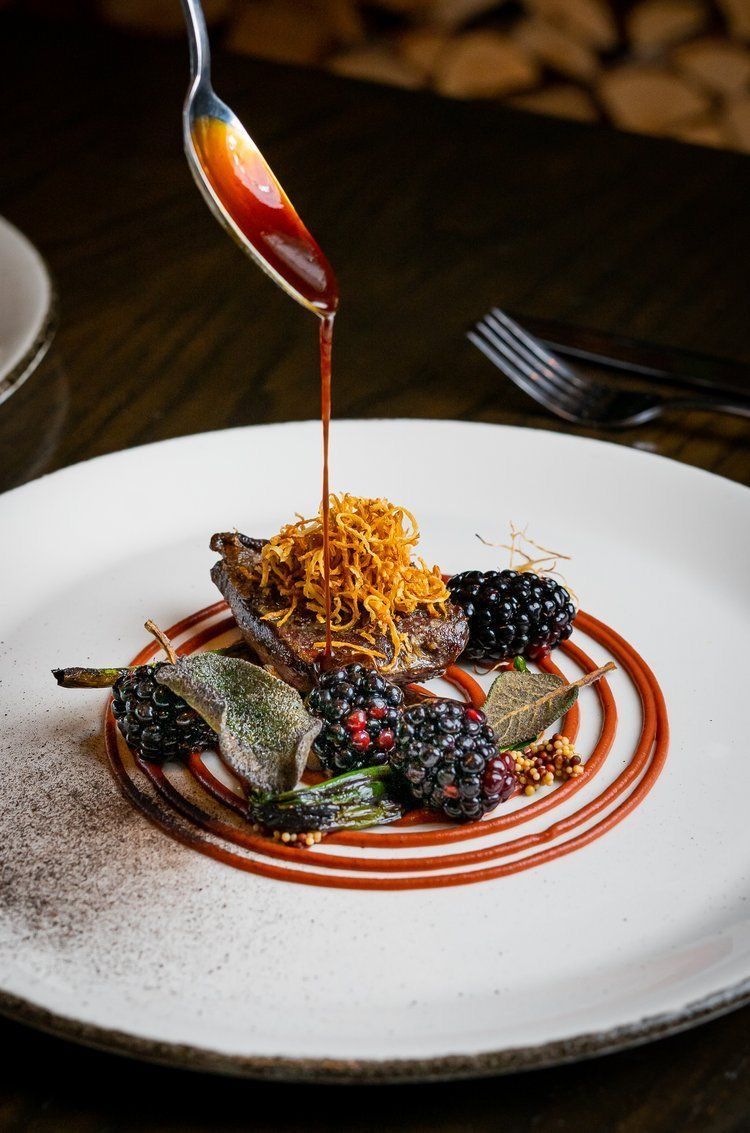
Inside the Dhoom Kitchen: Craft, Chaos & Control
Inside the Dhoom Kitchen: Craft, Chaos & Control
Inside the Dhoom Kitchen: Craft, Chaos & Control
Inside the Dhoom Kitchen: Craft, Chaos & Control
Inside the Dhoom Kitchen: Craft, Chaos & Control
Nov 1, 2025
Nov 1, 2025
Nov 1, 2025
Nov 1, 2025
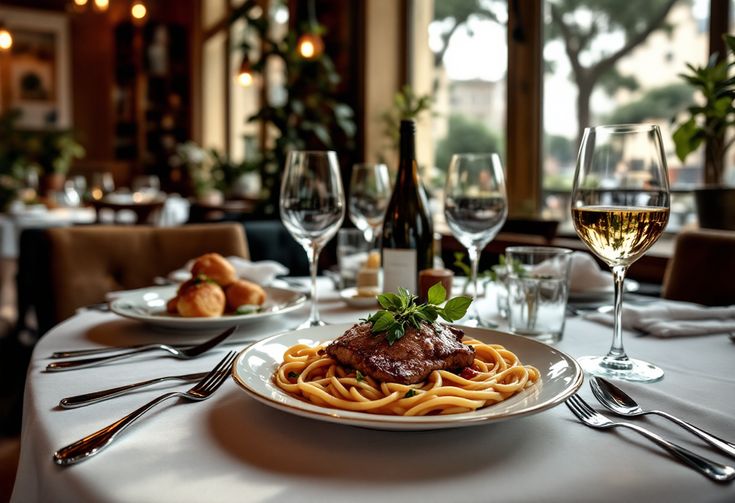
A great dining experience begins long before the guest arrives. Inside the Dhoom kitchen, every movement, every sound, and every decision serves one purpose. Create clarity on the plate. What looks effortless in the dining room is built on discipline, practice, and a team that moves with controlled precision. The kitchen is not chaos. It is a conversation between craft and timing.
Setup Creates Calm
The day begins quietly. Lights come on. The room warms. Stations are mapped with the focus of a studio preparing for a performance. Ingredients are weighed, washed, labeled, and arranged. Stocks are tasted both cold and hot because flavor behaves differently at each temperature. Spice blends are ground in small batches so aroma stays alive. Sauces rest until their texture settles.
Every station has a defined home for each tool. Nothing is left to guesswork. When service starts, the cook should reach without looking. This level of setup ensures that speed is never frantic. It is simply the result of efficiency. Calm is not the absence of work. It is the reward of preparation.
A great dining experience begins long before the guest arrives. Inside the Dhoom kitchen, every movement, every sound, and every decision serves one purpose. Create clarity on the plate. What looks effortless in the dining room is built on discipline, practice, and a team that moves with controlled precision. The kitchen is not chaos. It is a conversation between craft and timing.
Setup Creates Calm
The day begins quietly. Lights come on. The room warms. Stations are mapped with the focus of a studio preparing for a performance. Ingredients are weighed, washed, labeled, and arranged. Stocks are tasted both cold and hot because flavor behaves differently at each temperature. Spice blends are ground in small batches so aroma stays alive. Sauces rest until their texture settles.
Every station has a defined home for each tool. Nothing is left to guesswork. When service starts, the cook should reach without looking. This level of setup ensures that speed is never frantic. It is simply the result of efficiency. Calm is not the absence of work. It is the reward of preparation.
A great dining experience begins long before the guest arrives. Inside the Dhoom kitchen, every movement, every sound, and every decision serves one purpose. Create clarity on the plate. What looks effortless in the dining room is built on discipline, practice, and a team that moves with controlled precision. The kitchen is not chaos. It is a conversation between craft and timing.
Setup Creates Calm
The day begins quietly. Lights come on. The room warms. Stations are mapped with the focus of a studio preparing for a performance. Ingredients are weighed, washed, labeled, and arranged. Stocks are tasted both cold and hot because flavor behaves differently at each temperature. Spice blends are ground in small batches so aroma stays alive. Sauces rest until their texture settles.
Every station has a defined home for each tool. Nothing is left to guesswork. When service starts, the cook should reach without looking. This level of setup ensures that speed is never frantic. It is simply the result of efficiency. Calm is not the absence of work. It is the reward of preparation.
Heat, Timing, and the Language of Flavor
Indian cuisine speaks through heat. Not just in terms of spice, but in how ingredients react to temperature. A tadka blooms at the exact moment oil meets spice. A kebab lifts from the grill when smoke has kissed it but has not overpowered it. A curry gains depth when the fat separates naturally and rises to the top in a thin, glossy layer.
Control of heat is our core discipline. Timing defines texture. A second too long can mute brightness. A second too short can leave flavor unfinished. Cooks learn to listen to the simmer of a sauce, to read the shine on a reduction, and to trust their senses as much as their tools. Precision is not rigidity. It is respect for the ingredient.
Heat, Timing, and the Language of Flavor
Indian cuisine speaks through heat. Not just in terms of spice, but in how ingredients react to temperature. A tadka blooms at the exact moment oil meets spice. A kebab lifts from the grill when smoke has kissed it but has not overpowered it. A curry gains depth when the fat separates naturally and rises to the top in a thin, glossy layer.
Control of heat is our core discipline. Timing defines texture. A second too long can mute brightness. A second too short can leave flavor unfinished. Cooks learn to listen to the simmer of a sauce, to read the shine on a reduction, and to trust their senses as much as their tools. Precision is not rigidity. It is respect for the ingredient.
Heat, Timing, and the Language of Flavor
Indian cuisine speaks through heat. Not just in terms of spice, but in how ingredients react to temperature. A tadka blooms at the exact moment oil meets spice. A kebab lifts from the grill when smoke has kissed it but has not overpowered it. A curry gains depth when the fat separates naturally and rises to the top in a thin, glossy layer.
Control of heat is our core discipline. Timing defines texture. A second too long can mute brightness. A second too short can leave flavor unfinished. Cooks learn to listen to the simmer of a sauce, to read the shine on a reduction, and to trust their senses as much as their tools. Precision is not rigidity. It is respect for the ingredient.
Heat, Timing, and the Language of Flavor
Indian cuisine speaks through heat. Not just in terms of spice, but in how ingredients react to temperature. A tadka blooms at the exact moment oil meets spice. A kebab lifts from the grill when smoke has kissed it but has not overpowered it. A curry gains depth when the fat separates naturally and rises to the top in a thin, glossy layer.
Control of heat is our core discipline. Timing defines texture. A second too long can mute brightness. A second too short can leave flavor unfinished. Cooks learn to listen to the simmer of a sauce, to read the shine on a reduction, and to trust their senses as much as their tools. Precision is not rigidity. It is respect for the ingredient.

Flow at the Pass
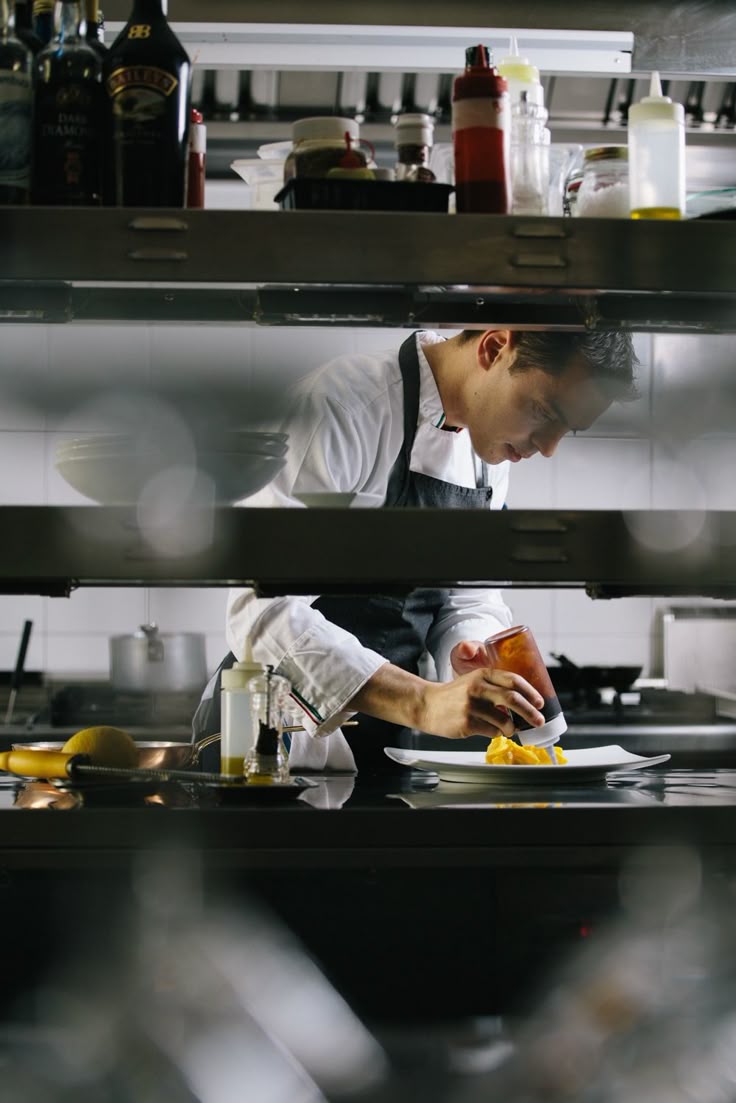
When the first tickets arrive, the kitchen shifts into a different gear. The pass becomes the conductor. Plates begin to move in coordinated waves, not as isolated tasks. The goal is not to rush. It is to align. Dishes for a single table must land together, carry the same temperature, and share a unified rhythm.
To maintain this flow, we follow a few essential habits:
Communicate in short, clear cues
Fire dishes in small controlled batches
Taste every component before it meets the plate
Send courses in sets to preserve narrative
Use the pass light to check glaze, color, and texture
Keep noise functional, never emotional
Service may look swift from the outside, but inside the line it feels controlled, measured, and deeply focused. A good service is one where the kitchen breathes together.
Flow at the Pass
When the first tickets arrive, the kitchen shifts into a different gear. The pass becomes the conductor. Plates begin to move in coordinated waves, not as isolated tasks. The goal is not to rush. It is to align. Dishes for a single table must land together, carry the same temperature, and share a unified rhythm.
To maintain this flow, we follow a few essential habits:
Communicate in short, clear cues
Fire dishes in small controlled batches
Taste every component before it meets the plate
Send courses in sets to preserve narrative
Use the pass light to check glaze, color, and texture
Keep noise functional, never emotional
Service may look swift from the outside, but inside the line it feels controlled, measured, and deeply focused. A good service is one where the kitchen breathes together.
Flow at the Pass
When the first tickets arrive, the kitchen shifts into a different gear. The pass becomes the conductor. Plates begin to move in coordinated waves, not as isolated tasks. The goal is not to rush. It is to align. Dishes for a single table must land together, carry the same temperature, and share a unified rhythm.
To maintain this flow, we follow a few essential habits:
Communicate in short, clear cues
Fire dishes in small controlled batches
Taste every component before it meets the plate
Send courses in sets to preserve narrative
Use the pass light to check glaze, color, and texture
Keep noise functional, never emotional
Service may look swift from the outside, but inside the line it feels controlled, measured, and deeply focused. A good service is one where the kitchen breathes together.
Flow at the Pass
When the first tickets arrive, the kitchen shifts into a different gear. The pass becomes the conductor. Plates begin to move in coordinated waves, not as isolated tasks. The goal is not to rush. It is to align. Dishes for a single table must land together, carry the same temperature, and share a unified rhythm.
To maintain this flow, we follow a few essential habits:
Communicate in short, clear cues
Fire dishes in small controlled batches
Taste every component before it meets the plate
Send courses in sets to preserve narrative
Use the pass light to check glaze, color, and texture
Keep noise functional, never emotional
Service may look swift from the outside, but inside the line it feels controlled, measured, and deeply focused. A good service is one where the kitchen breathes together.
Discipline You Can Taste
Every detail in the kitchen exists to protect flavor. Boards are rotated to avoid cross aromas. Oils are filtered so textures stay clean. Herbs are cut just before service so they carry their full brightness. Even the way we store spices minimizes exposure to air and light. These habits preserve purity.
Training goes beyond showing how to cook a dish. New cooks learn why a curry must rest, why a spice must be toasted at a particular shade, and why certain steps cannot be rushed. The goal is not repetition. It is understanding. When everyone shares the same intent, consistency becomes natural.
Closing the kitchen is as important as opening it. Pans return to neutral. Stocks cool under strict timing. Sauces are marked for the next day. Notes are written so the morning team begins with clarity rather than correction. The kitchen resets itself like an instrument tuned for the next performance.
What reaches the table is the quiet result of hundreds of choices made with purpose. Guests may not see the rituals, the handoffs, or the precision behind each plate. They will feel it. They will taste the calm, the balance, and the confidence of a team that treats craft not as a moment but as a discipline. That is the soul of the Dhoom kitchen.
Discipline You Can Taste
Every detail in the kitchen exists to protect flavor. Boards are rotated to avoid cross aromas. Oils are filtered so textures stay clean. Herbs are cut just before service so they carry their full brightness. Even the way we store spices minimizes exposure to air and light. These habits preserve purity.
Training goes beyond showing how to cook a dish. New cooks learn why a curry must rest, why a spice must be toasted at a particular shade, and why certain steps cannot be rushed. The goal is not repetition. It is understanding. When everyone shares the same intent, consistency becomes natural.
Closing the kitchen is as important as opening it. Pans return to neutral. Stocks cool under strict timing. Sauces are marked for the next day. Notes are written so the morning team begins with clarity rather than correction. The kitchen resets itself like an instrument tuned for the next performance.
What reaches the table is the quiet result of hundreds of choices made with purpose. Guests may not see the rituals, the handoffs, or the precision behind each plate. They will feel it. They will taste the calm, the balance, and the confidence of a team that treats craft not as a moment but as a discipline. That is the soul of the Dhoom kitchen.
Discipline You Can Taste
Every detail in the kitchen exists to protect flavor. Boards are rotated to avoid cross aromas. Oils are filtered so textures stay clean. Herbs are cut just before service so they carry their full brightness. Even the way we store spices minimizes exposure to air and light. These habits preserve purity.
Training goes beyond showing how to cook a dish. New cooks learn why a curry must rest, why a spice must be toasted at a particular shade, and why certain steps cannot be rushed. The goal is not repetition. It is understanding. When everyone shares the same intent, consistency becomes natural.
Closing the kitchen is as important as opening it. Pans return to neutral. Stocks cool under strict timing. Sauces are marked for the next day. Notes are written so the morning team begins with clarity rather than correction. The kitchen resets itself like an instrument tuned for the next performance.
What reaches the table is the quiet result of hundreds of choices made with purpose. Guests may not see the rituals, the handoffs, or the precision behind each plate. They will feel it. They will taste the calm, the balance, and the confidence of a team that treats craft not as a moment but as a discipline. That is the soul of the Dhoom kitchen.
Discipline You Can Taste
Every detail in the kitchen exists to protect flavor. Boards are rotated to avoid cross aromas. Oils are filtered so textures stay clean. Herbs are cut just before service so they carry their full brightness. Even the way we store spices minimizes exposure to air and light. These habits preserve purity.
Training goes beyond showing how to cook a dish. New cooks learn why a curry must rest, why a spice must be toasted at a particular shade, and why certain steps cannot be rushed. The goal is not repetition. It is understanding. When everyone shares the same intent, consistency becomes natural.
Closing the kitchen is as important as opening it. Pans return to neutral. Stocks cool under strict timing. Sauces are marked for the next day. Notes are written so the morning team begins with clarity rather than correction. The kitchen resets itself like an instrument tuned for the next performance.
What reaches the table is the quiet result of hundreds of choices made with purpose. Guests may not see the rituals, the handoffs, or the precision behind each plate. They will feel it. They will taste the calm, the balance, and the confidence of a team that treats craft not as a moment but as a discipline. That is the soul of the Dhoom kitchen.